Bringing Our UK Car to France: How We Registered a Land Rover Discovery on French Plates
Bringing a UK Car to France: Our French Registration Experience
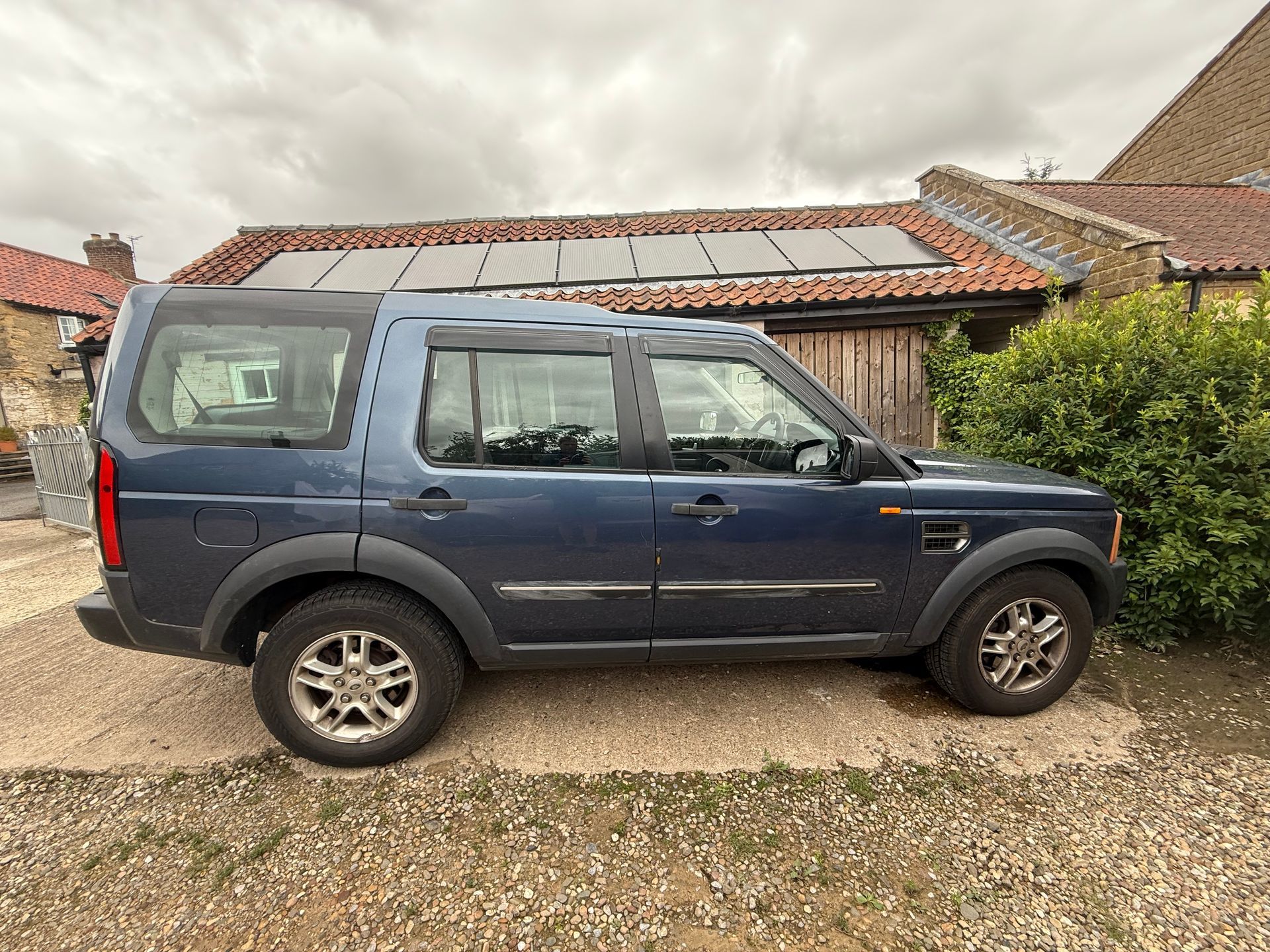
A month ago, our Land Rover Discovery was sitting in Yorkshire on British number plates.
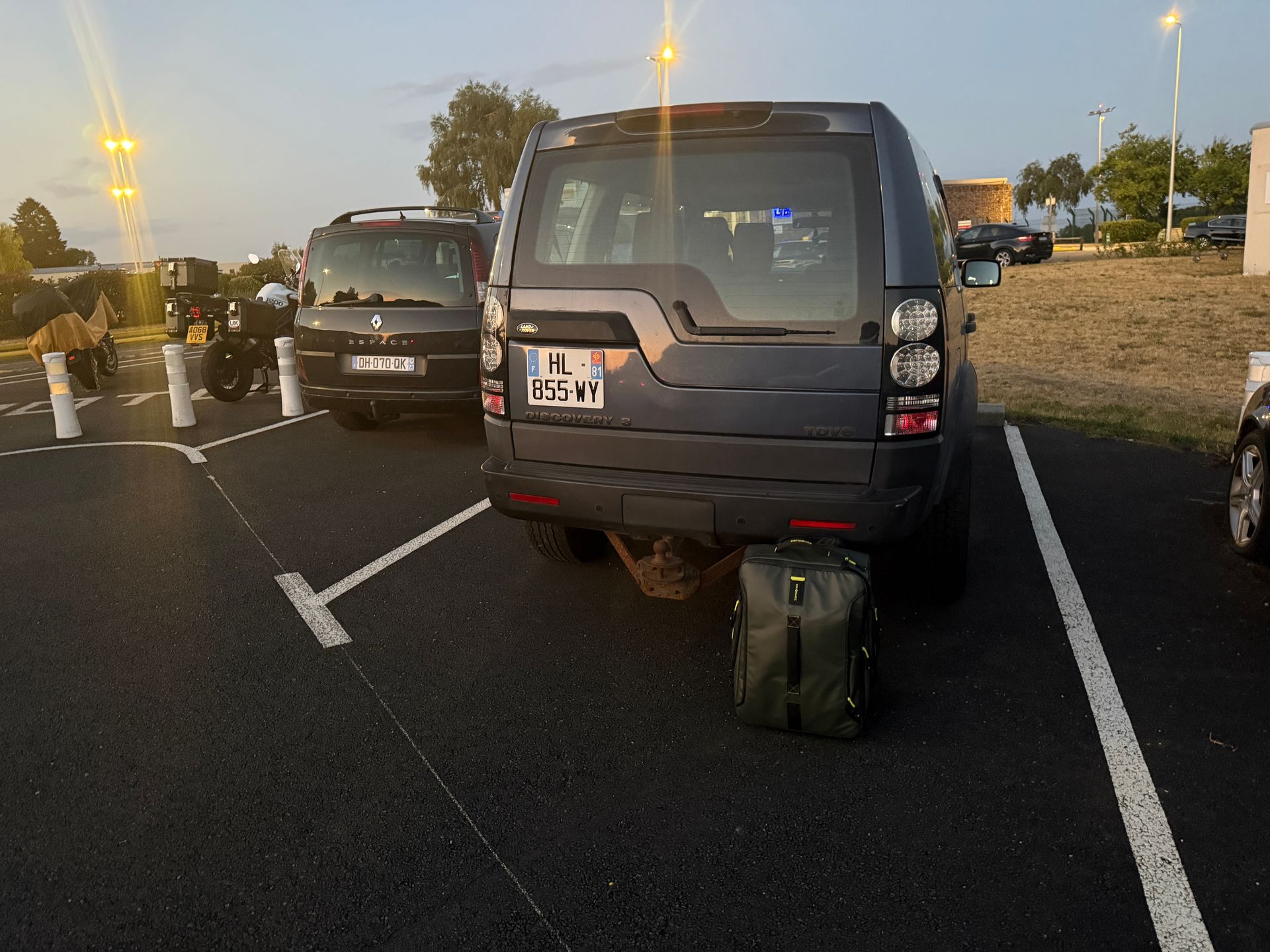
It is now in France wearing HL-855-WY, complete with a Tarn 81 identifier, and looking remarkably at home on French roads.
I had expected getting it registered in France to be considerably more painful than it actually was.
There was paperwork. There were several wonderfully contradictory emails from ANTS. There was the inevitable moment when a French government website decided that the PDF we had carefully prepared was too high quality. And finding somebody capable of making a square rear number plate for a Land Rover Discovery proved unexpectedly difficult.
But overall?
The French administration was straightforward, everyone we dealt with was helpful, and the entire process took about a month.
Given how many British clients we meet who either bring a vehicle to France or are considering doing so when they buy a French property, I thought our experience might be useful.
Why bring our own car to France?
This wasn't really about having another car in France.
The Discovery is a working vehicle.
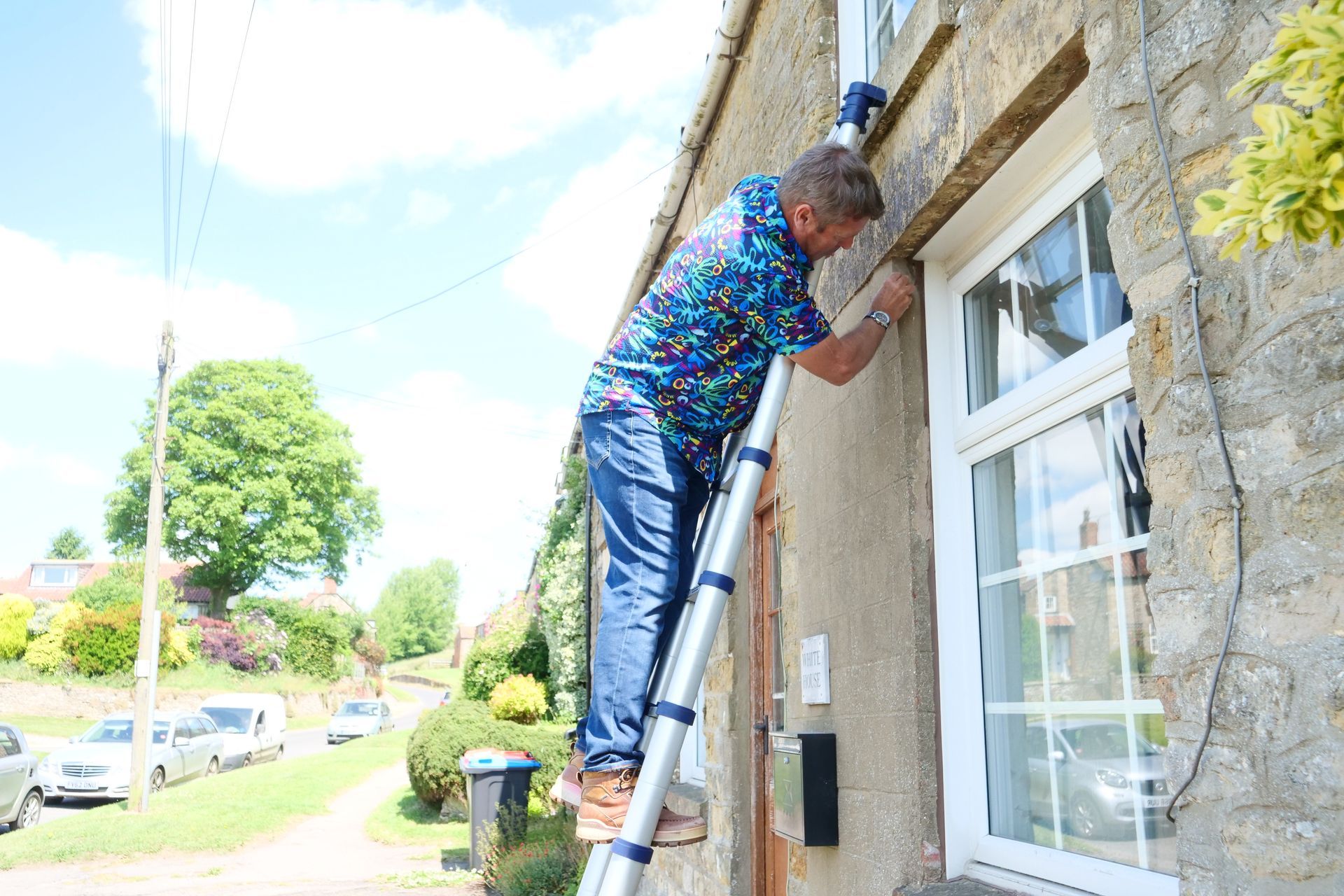
We carry surveying equipment, ladders and various bits and pieces that aren't particularly convenient when you're constantly hiring cars and flying backwards and forwards. Some of the properties we inspect are also decidedly rural, where a Discovery is rather more appropriate than whatever happens to be available at the airport hire desk.
We already knew the vehicle well, and it was set up for our work.
There was another useful coincidence. We had previously owned a Discovery 3 and still had its left-hand-drive headlamps, so those could be fitted to the current vehicle for use in France.
The decision was therefore made in early June: rather than continue treating the Discovery as a UK vehicle visiting France, we would take it over properly and register it there.
That began with a week-long road trip through France.
First hurdle: importing the vehicle
Since Brexit, bringing a UK-registered vehicle permanently into France involves customs formalities because the UK is outside the EU customs territory.
Our customs process took us to Toulouse-Blagnac.
This was one of the stages I had expected to be difficult. In reality, once we had established exactly where we needed to go and which documents were required, it was remarkably painless.
The customs officers were helpful and the process resulted in the important Certificat 846A, which provides evidence that the vehicle has been properly cleared through French customs.
That document would subsequently become one of the key pieces of evidence for the French registration application.
The precise customs and tax position will depend on the circumstances in which a vehicle is imported, so our experience shouldn't be taken as a calculation of what another owner will pay. If you're contemplating importing a vehicle, check the current French customs requirements for your particular circumstances before setting off.
The important point for our story is that we left Toulouse with the 846A.
One major hurdle crossed.
Next stop: the Contrôle Technique
The Discovery then needed its French Contrôle Technique, broadly equivalent to the UK MOT although the testing regime isn't identical.
We booked this in Carcassonne.
Again, this was something I had slightly overthought beforehand.
Would they accept the British V5C because we didn't yet have a French carte grise?
Would there be some obscure problem because the vehicle was halfway through the import process?
In practice, the UK registration documents provided the necessary vehicle information and the Discovery passed its CT.
That gave us another essential document for the registration application.
It also meant that, mechanically at least, our 20-year-old Land Rover had officially satisfied the French testing system.
Not bad after driving across France.
French insurance before French registration
There is an apparent chicken-and-egg situation when registering an imported vehicle.
You need insurance, but you don't yet have a French registration number.
Our French insurer, Allianz, was very helpful about this.
They were able to insure the Discovery temporarily using its UK registration while the French registration process was completed. We supplied the UK V5C, driving licence and evidence of our UK no-claims history.
Our UK no-claims record was recognised and converted to a French bonus of 0.50.
Once the vehicle received its French registration, we could simply provide the new number and have the insurance records updated.
Again, what initially sounded complicated turned out to be fairly logical once we spoke to somebody who understood what we were doing.
Then came ANTS
The French vehicle registration system is administered through France Titres / ANTS.
This was the stage I'd heard the most horror stories about.
We created the application for:
“Immatriculation d'un véhicule d'occasion acquis à l'étranger”
— registration of a used vehicle acquired abroad.
Our application included the principal documents we had gathered during the process, including:
- the UK V5C;
- Certificate of Conformity;
- Certificat 846A from French customs;
- French Contrôle Technique;
- French insurance documentation;
- proof of identity;
- proof of our French address; and
- the registration application documentation.
The application was submitted and entered the ANTS system.
So far, so good.
Then the emails started.
When three emails arrive from ANTS at exactly the same time...
This was probably the most confusing part of the entire process.
ANTS has an impressive ability to send several automated emails simultaneously that, at first glance, appear to contradict one another.
One told us our application had been successfully transmitted to the administration.
Another told us documents were available in our account.
And another said:
“Votre demande nécessite une action de votre part.”
Our application required action.
For a moment, it looked as though something had gone wrong.
It hadn't.
The useful lesson here was to look at the actual status of the application in the ANTS account rather than trying to decipher the automated emails in isolation.
Our application showed:
EN INSTRUCTION
The French authorities had taken charge of the application and an officer was examining the vehicle information.
We simply had to wait.
Then a real person looked at the application
This was actually reassuring.
Rather than rejecting the application because something wasn't sufficiently clear, the caseworker contacted us and explained precisely what was required:
Veuillez fournir la partie caractéristiques de la carte grise lisible, un permis de conduire et le document d'assurance du véhicule en cours de validité.
In other words, they wanted:
- a clearly legible copy of the characteristics section of the British V5C;
- a valid driving licence; and
- current proof of insurance.
Perfectly reasonable.
The original V5C copy apparently wasn't clear enough, so we produced a better one, added the UK driving licence and French insurance document, and prepared a single PDF.
Problem solved.
Or so we thought.
Your paperwork is too good
The ANTS website rejected it.
Not because anything was missing.
The PDF was too large.
The maximum permitted file size for that particular upload was 1MB.
There is something wonderfully French-administrative about carefully producing a high-resolution copy because you've specifically been asked for a document that is lisible, only to be told that your beautifully legible file is now too big.
We reduced the document size, uploaded it again and resubmitted the application.
The status returned to the administrative process.
And then, naturally, we received another little collection of ANTS emails.
By this point we'd learned not to worry.
And then came the good news
The next meaningful stage was the one we had been waiting for.
ANTS had accepted the application and calculated the registration taxes.
For our Discovery, the bill was:
Regional tax: €387.00
Fixed tax: €11.00
Delivery charge: €2.76
Total: €400.76
There was no CO₂ malus or weight tax shown on our registration calculation.
That figure is specific to our vehicle and our registration circumstances. French vehicle registration taxes depend on factors including the vehicle, its age, fiscal horsepower and the region concerned, so don't assume another vehicle will cost the same.
We paid the €400.76 online.
And that was it.
Our Discovery ceased being CV55… and became:
HL-855-WY
The Certificat Provisoire d'Immatriculation (CPI) was issued immediately.
The CPI confirmed the new French registration, the vehicle details and our French address while we waited for the permanent carte grise.
After several weeks of documents, customs, insurance and websites, seeing HL-855-WY appear on the certificate was surprisingly satisfying.
We had successfully imported and registered our own vehicle in France.
There was just one little job remaining.
We needed some number plates.
Surely getting two number plates would be the easy bit?
Apparently not.
A Discovery 3 has a square recess for its rear number plate.
The first large national motor factor we tried could make a normal French plate but couldn't make the square rear plate we required. Nor could they provide the departmental identifier we wanted.
We tried another major chain.
Same problem.
Eventually Feu Vert suggested Auto Distribution 81, who could supply exactly what we needed.
We ordered a standard front plate and the correct square-format rear plate, both carrying the 81 Tarn departmental identifier.
They were ready the following day.
A pop-rivet gun — une pince à riveter, for anyone who suddenly finds themselves trying to buy one in France — completed the job.
And with a few rivets, the transformation was complete.
HL-855-WY was officially on the road.
How long did the whole process take?
This is perhaps the biggest surprise.
We decided at around the beginning of June that we would bring the Discovery over during a week-long French road trip.
The French registration was approved in early July and the number plates were subsequently fitted.
So from deciding to do it to having a French registration number was about one month.
And that wasn't one month of continuous bureaucracy.
We were travelling backwards and forwards between Britain and France and fitting appointments around work. Had we been permanently in France and able to arrange the various stages consecutively, I suspect we could have completed it faster.
The administration itself wasn't what caused most of the delay.
Was French bureaucracy difficult?
This is probably the part of the experience most worth sharing.
No, not particularly.
There were quirks.
ANTS sending three automated emails simultaneously didn't help.
The 1MB PDF limit raised an eyebrow.
Finding the right part of the website occasionally required some deciphering.
But none of that was unreasonable once we understood what was being requested.
More importantly, everyone we dealt with was helpful.
The customs officials helped us through the import procedure.
The Contrôle Technique centre understood that the vehicle was still on British documents.
Our insurer understood the transition from UK registration to French registration.
And when the ANTS caseworker needed clearer information, they didn't simply reject the application.
They told us exactly what they wanted and gave us the opportunity to provide it.
That isn't quite the nightmare of French bureaucracy we're sometimes warned about.
French administration is often different, rather than difficult
Having lived and worked in France, perhaps this shouldn't have surprised me.
French administration has a reputation among British expats for being impenetrable. Sometimes it certainly can be frustrating, particularly when you're trying to understand terminology that doesn't have a direct British equivalent.
But there is a wider lesson here.
Different doesn't necessarily mean difficult.
Once we understood the sequence, the vehicle registration process had its own logic:
Customs clearance.
Technical documentation.
Contrôle Technique.
Insurance.
Registration application.
Supporting documents.
Payment.
French registration.
At each stage, the important thing was to understand what the French authority actually wanted rather than trying to force the process into a British equivalent.
There is, perhaps, a parallel with buying a house in France.
What importing a Land Rover reminded me about buying French property
British buyers naturally approach a French property purchase using their experience of buying property in Britain.
The terminology looks vaguely familiar.
There's an estate agent.
There's a notaire.
There are diagnostic reports.
There's a preliminary contract.
It is tempting to mentally translate each of those into its British equivalent and assume the rest of the process will follow.
It doesn't always.
The French system isn't necessarily worse. It simply has its own roles, documents and sequence.
That's exactly what we found with the Discovery.
Once we stopped asking, effectively, “What's the British equivalent of this?” and instead dealt with the French process on its own terms, things became considerably easier.
It's much the same advice I'd give somebody buying an old farmhouse, village house or château.
Understand what each professional is actually responsible for.
Understand what the documents you've been given actually cover.
And get the specialist advice you need before you become committed to the purchase.
Ready for work in France
A few days after fitting the plates, I stopped at Saint-Antonin-Noble-Val and took a couple of photographs.
This isn't a showroom Land Rover.
It's a working survey vehicle carrying equipment around France, visiting everything from village houses and farmhouses to châteaux and renovation projects. A bit of French dust seems entirely appropriate.
Later, it was back at Limoges Airport, parked in our seasonal parking space with the surveying equipment safely stored in the back, ready for the next trip.
What started as a practical decision to make travelling around France easier has also given us a useful first-hand insight into another aspect of establishing yourself in France.
And the experience was considerably more positive than some of the stories we'd heard beforehand.
A few practical lessons from our experience
If you're thinking about bringing your own UK vehicle to France, our main lessons would be fairly simple.
Don't rely on somebody else's checklist without checking that it applies to your circumstances. Vehicle age, ownership, customs status and other factors can change what is required.
Keep good-quality copies of everything. You'll probably need the same documents more than once.
Keep your V5C accessible. The technical characteristics were specifically requested during our application.
Don't panic when ANTS sends an email. Log into your account and check the actual application status.
Have a way of reducing PDF file sizes. This sounds trivial until you're sitting in France with every document required and the website refuses to accept a 1.2MB file.
Allow some time. Ours took roughly a month despite quite a bit of travelling. Don't leave it until the last possible moment.
And if you drive a Discovery 3, perhaps find somebody who can make a square French rear number plate before you've spent an afternoon visiting national motor factors.
That particular lesson was learned for you.
One final thought
Our experience of registering the Discovery reinforced something we've learned repeatedly from working with English-speaking property buyers in France.
France isn't Britain with different road signs and better weather.
The systems are different.
Whether you're registering a car or buying a 250-year-old stone farmhouse, trying to apply British assumptions to a French process can make something straightforward feel unnecessarily complicated.
Get the right information, understand the sequence and ask for help when something isn't clear.
Our Discovery is now officially French.
The next job is considerably more familiar territory for us: getting it down narrow country lanes to inspect French buildings.
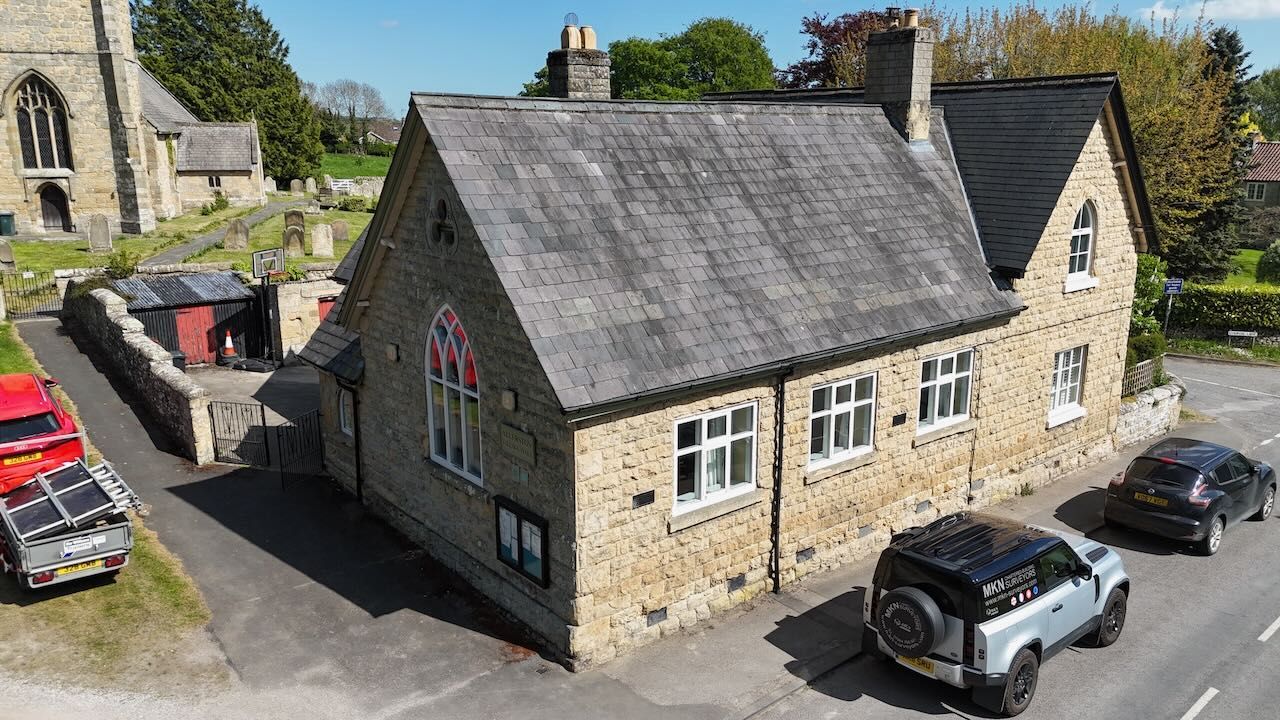
If you're buying an older house, farmhouse, village property, château, ski chalet or renovation project in France, MKN Surveyors provides independent Level 3 building surveys in English, with particular experience in traditional and historic buildings.
A detailed building survey before signing the compromis de vente can identify defects and future expenditure that aren't within the scope of the statutory French diagnostic reports, giving you the information you need while you can still act upon it.
MKN Surveyors
Chartered Building Surveyors & RICS Certified Historic Building Professionals
Tel:
+44 (0)1944 768561
Email:
matthew@mkn-surveyors.com